

Russet
by Kevin Young


The Poem
“Russet” embodies Kevin Young’s style: surprising images, metaphors hiding below the surface, and short lines flowing into and over each other. The poem jaunts from one scene to the next in pursuit of its epiphany: home, and the act of letting go, is what saves us. Loaded with images of autumn, sunrise, and collapse, the poem is a subtle nod to the beauty of allowing things to be as they are. Here’s to finding that peace.
Its Colors
With each poem we share, we ask Claude 3.5 (Sonnet) to generate a palette of five colors that embody the poem’s content and mood. Claude shares its color choices with us via hexadecimal codes, and we share them with you via the palette below:
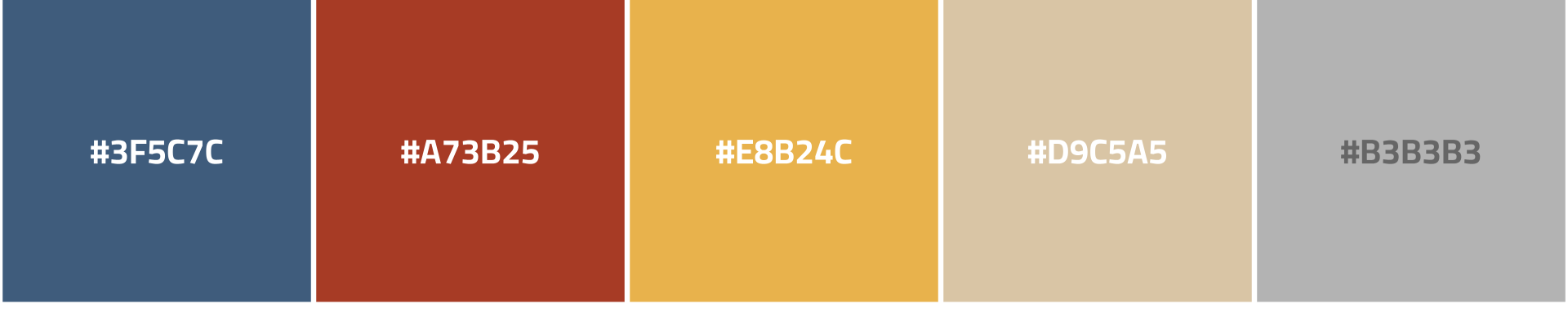
#3F5D7D: A deep, calming blue that reflects the "blue beyond the window" and the sense of coming home to a place of comfort and familiarity.
#E8B34D: A warm, golden yellow that represents the line "be like this slow yellow. Let go." This color captures the essence of letting go and embracing the present moment with a gentle, radiant glow.
#A63B24: A rich, russet hue that evokes the imagery of "autumn gathers in the trees, russet," symbolizing the cyclical nature of life and the beauty found in change and transition.
#B3B3B3: A cool, slate gray that reflects the "cold ground" and the melancholic undertones of the poem, while also providing a grounding and neutral presence.
#D9C5A5: A soft, earthy beige that represents the line "God, it is hard being happy if you try," suggesting a sense of natural simplicity and acceptance, rather than striving for an idealized state of happiness.
This palette combines rich, natural tones with cool, soothing hues, creating a harmonious balance that captures the poem's contemplative and introspective essence, while also celebrating the beauty found in the ordinary moments of life.
Things to Notice
“Russet” is a relatively short poem but still contains a number of techniques worth noticing. These are the three we’d recommend paying the closest attention to:
Enjambment: Much of Kevin Young’s work makes use of enjambment to create additional meaning, and “Russet” is no exception. Reading the poem feels like unspooling a narrative, with new twists arriving at the genesis of each line. Take these lines, for instance:
I’m home. I’m done being
in love with
what leaves—
autumn gathers“I’m done being” could have a meaning unto itself: “I’m done trying” or “I can no longer continue existing as I am.” But the following two lines expand on that meaning (“I’m done being in love with what leaves”), providing the original line with multiple potential readings. What’s more, the use of enjambment between “what leaves—” and “autumn gathers” allows Young to build a connection between leaving and autumn while simultaneously contrasting the actions of leaving and gathering.
Polysemy: Polysemy is the technique of utilizing a word with multiple definitions to create ambiguity or additional meanings. Essentially a pun, polysemy can be used to deepen a poem or provide a spark or irony or wit. As with the use of enjambment, polysemy is common in much of Young’s work. Within “Russet,” we typically use the example above to point out how polysemy functions in a poem. In the context of its line, “leaves” is used as a verb; however, within the context of its stanza, it works as both a verb and a noun and transitions the poem from reflection to an image of autumn. For instance, one reading of the four lines quoted above might be, “I’m home. I’m done being in love with what leaves,” while another might be, “I’m done being in love with… What leaves—autumn gathers…” The first is the more literal interpretation, but the second (with Young’s reflection trailing off before an exclamation about the scene in front of him) is still a possibility, and the potential for that possibility is created by the combined use of enjambment and polysemy.
Metaphor: Although a number of metaphors float beneath the poem’s surface, we’re most fond of the metaphor contained in Young’s descriptions of autumn. As with all metaphors, there are a number of ideas that autumn could embody, but we tend to read it as a description of the beauty of letting go or finding some sort of peace. (This is also the meaning most directly implied by the poem.) Notably, most trees shed their leaves after a bright performance of yellows, oranges, and reds. There’s something bright and gorgeous about the unclenching of a hand.
Questions to Ask
One of our favorite characteristics of poetry is its ability to spark interesting questions. To that end, here are two that came to mind while we read:
What is the effect of Young’s form? Although the poem is free verse, it follows a fairly set pattern: three-line stanzas with the second line indented and no lines longer than five words. How does that structure complement or deepen the poem’s message and impact?
Although most of the poem address the act of letting go, there are hints at the power of returning. For instance, in the third stanza, Young describes the new day as “the blue beyond the window returning.” Do the ideas of letting go and returning (perhaps returning home) complement or contradict each other? And, in either case, how do they strengthen the poem?
Classroom Context
Because Eclectic & Electric is written first and foremost as a resource for teachers, here are a few ideas you might consider should you choose to incorporate Young’s poem into your classroom:
Look for Complicated Line Breaks: Young’s use of enjambment is potent, which makes “Russet” a good poem to use when talking about the differences between poetry and prose and the reasons poems don’t fall into simple sentences and paragraphs. For that reason, we recommend asking students to look for “complicated line breaks,” places in the poem where a line break makes the meaning of the stanza more complex or provides a “twist” to the poem. This practice can awaken students to the underlying complexities of poetry and serve as a reminder to pay close attention to the details.
Launch Students into Writing: “Russet” provides a number of on-ramps into journaling or creative writing exercises. One of our favorites, though, is to highlight this truth within the poem’s closing lines: “It is hard being happy if you try.” After pointing out Young’s line, we might ask students if they agree or disagree with Young before prompting them to consider other things that are difficult to do “if you try.” We like to encourage students to think both concretely and abstractly here, and a free write is generally the writing stance we ask students to assume. After students have generated some thoughts, you might consider having them build their observations into fuller, more complete pieces. We’re confident you’ll discover some gems.
Enjoy our work? Share it with your colleagues and friends. We’d love to expand our community, reach a wider audience, and keep sharing quality poetry.