

Perhaps the World Ends Here
by Joy Harjo


The Poem
“Perhaps the World Ends Here” by Joy Harjo is a celebration. Using a kitchen table as a symbol of human connection, Harjo creates a portrait of the world—the human experience—within the bounds of well-worn wood. From birth to death, love to war, the table in Harjo’s poem contains and connects lives and generations—it weathers the whirlwinds of those it supports.
While we adore nearly every line in this poem, our favorite is the final one: “Perhaps the world will end at the kitchen table, while we are laughing and crying, eating of the last sweet bite.” May we all “eat of the last sweet bite,” bravely, regardless of the world.
Its Colors
With each poem we share, we ask Claude 3.5 (Sonnet) to generate a palette of five colors that embody the poem’s content and mood. Claude shares its color choices with us via hexadecimal codes, and we share them with you via the palette below:
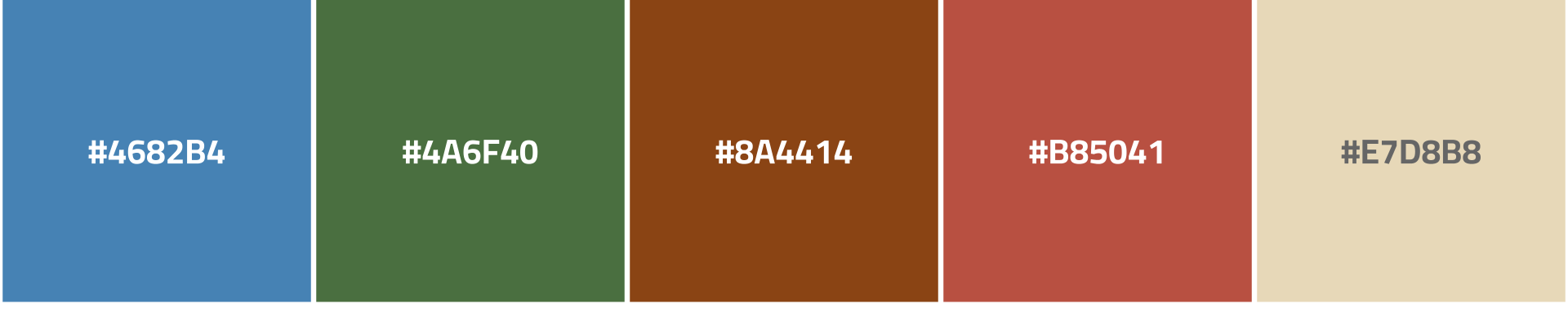
#8B4513 (Saddle Brown): This rich, earthy brown represents the wooden kitchen table, the central element of the poem. It symbolizes warmth, stability, and the grounding nature of family gatherings.
#E6D7B8 (Wheat): A soft, warm beige that evokes the color of fresh bread and baked goods. It represents nourishment, comfort, and the "gifts of earth" mentioned in the poem.
#4A6F41 (Dark Olive Green): This deep green symbolizes growth, life, and the natural world. It reflects the poem's themes of creation, sustenance, and the cyclical nature of life.
#B85042 (Indian Red): A rich, warm red that represents the passion, love, and intensity of human experiences described in the poem. It also hints at the "last sweet bite" mentioned in the final line.
#4682B4 (Steel Blue): This calming blue represents the passage of time, memories, and the emotional depth present in the poem. It also alludes to the table being "a house in the rain, an umbrella in the sun."
This palette captures the essence of Joy Harjo's poem by combining warm, earthy tones with more vibrant hues. The saddle brown anchors the palette, much like the kitchen table anchors the poem, representing the solid foundation of human experience. The wheat color adds warmth and comfort, reflecting the nourishing aspects of food and family. The dark olive green introduces an element of nature and growth, tying into the poem's themes of creation and sustenance. The Indian red brings passion and intensity, embodying the full spectrum of human emotions described in the poem. Finally, the steel blue adds depth and tranquility, representing the passage of time and the emotional resonance of shared experiences. Together, these colors create a balanced, inviting palette that captures the poem's exploration of life, family, and the human condition, from joyful celebrations to moments of sorrow and reflection.
Things to Notice
As with much of Harjo’s writing, “Perhaps the World Ends Here” is relatively straightforward in its syntax and word choice. Beneath the surface, however, are multiple important techniques at play. Here are a few that we recommend paying attention to:
Symbolism: The poem centers the symbol of the kitchen table as its driving force. Although there are a number of potential interpretations for the table’s figurative meaning, we tend to read it as representative of the human condition. It extends beyond a single person, spreads across generations, and is buoyed by hope and despair, grief and joy. Within the poem, Harjo lends the table additional meaning by closely associating the acts of life and death with its simple existence.
Juxtaposition: Within Harjo’s list of events that take place at the table—birth and burial, war and celebration—juxtaposition abounds. These instances of sharp contrast illustrate the complexity and range of the human experience and point at what it means to live a life. Across the poem as a whole, Harjo juxtaposes the end of the world with a world very much alive and vibrant—filled with families going about their day-to-day lives. It’s in the final line of the poem that this juxtaposition is brought to a head when Harjo writes, “Perhaps the world will end at the kitchen table, while we are laughing and crying, eating of the last sweet bite,” possibly implying that the supposed end of the world has little significance to those who have embraced their lives from beginning to end.
Imagery: Nearly every line in the poem presents a new image with the kitchen table at its center: a meal prepared, a baby teething, a prayer of remorse. These images ground the poem in the concrete and establish an important sense of relatability between the reader and poem’s symbolism. We all have experienced a kitchen table of our own, and we sense the truth behind Harjo’s scenes.
Questions to Ask
One of our favorite characteristics of poetry is its ability to spark interesting questions. To that end, here are two that came to mind while we read:
What is the meaning of Harjo’s final line? We have a few ideas, but we’re intrigued by its ambiguity. Will we fail to notice the end of the world, and if so, will it be for the better? Are we, and our families, our own self-contained worlds, so to speak? Perhaps “the world” as we’ve seen it before is not “the world” Harjo interrogates here.
What is the role of the kitchen tables in our lives? Think of what your kitchen table, or perhaps your childhood kitchen table, has seen. What role has it played in your life? How do the innocuous objects in our homes and lives shape the way we see the world?
Classroom Context
Because Eclectic & Electric is written first and foremost as a resource for teachers, here are a few ideas you might consider should you choose to incorporate Harjo’s poem into your classroom:
Launch Students into a Creative Writing Assignment: We recommend using Harjo’s poem to inspire students’ creativity. Harjo addresses the importance of the kitchen table, but what other objects in our lives bear subtle significance? Ask students to identify objects in their homes that are more important than they seem, and ask them to describe the things the object has “seen” or “experienced” in the same way Harjo does. Once students are done writing, ask them to reflect on the symbolic power of the objects they chose.
Talk About Symbolism: Harjo’s use of symbolism is generally tangible and clear for most students. Consequently, “Perhaps the World Ends Here” is a good poem for teaching students about the mechanics and function of symbols. We recommend building on the creative writing exercise described above by asking students to analyze the symbols in their own writing before moving on to the symbols present in other pieces of literature. Even if you don’t have time for students to write their own poetry, though, you might still ask students to engage with the practice of noticing the symbols that exist in their lives by having them identify symbolic objects from their homes. As you progress through the school year, we recommend returning frequently to the exercise of identifying symbols in plain sight—it’s good practice for students’ analytical skills and, more importantly, their ability to make meaning from their lives. Perhaps they’ll come to understand themselves, or the world, a bit more deeply once they truly see what’s around them.
Enjoy our work? Share it with your colleagues and friends. We’d love to expand our community, reach a wider audience, and keep sharing quality poetry.