

Let Me Begin Again
by Major Jackson


The Poem
“Let Me Begin Again” by Major Jackson is loud and celebratory, yet subtle and reflective. It’s a call to live life again, or at least anew, awake to the wonder that’s the day-to-day. Jackson builds the poem on repetition, reiterating the phrase “let me” followed by a wish to live life differently than before.
And although we’re infatuated with the entire poem, Jackson’s four closing lines are our favorite part of the poem:
This time, let me not sleep like the prophet who
believes he’s seen infinity. Let me run
at break-neck speeds toward sceneries
of doubt. I have no more dress rehearsals
to attend. Look closer: I am licking my lips.
Jackson’s is a poem worth reading time and again, but it’s especially poignant when you’re at your lowest or looking for a fresh start. May you find one when you’re in need.
Its Colors
With each poem we share, we ask Claude 3.5 (Sonnet) to generate a palette of five colors that embody the poem’s content and mood. Claude shares its color choices with us via hexadecimal codes, and we share them with you via the palette below:
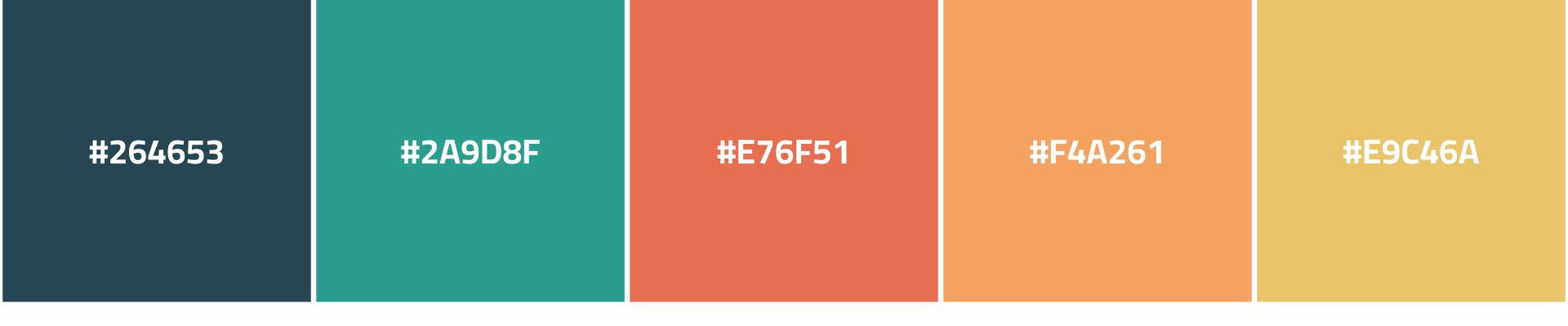
#F4A261 (Soft Peach): This warm, sandy hue represents the beach at dawn and the "quiet thought" that opens the poem. It evokes a sense of new beginnings and gentle awakening.
#2A9D8F (Teal Green): Reminiscent of the sea and pines mentioned in the poem, this color symbolizes nature's constancy and the speaker's desire for renewal. It's both calming and invigorating.
#264653 (Deep Navy): This rich, deep blue represents the night sky, the "Sea of Stars," and the depths of introspection present throughout the poem. It adds gravity and contemplation to the palette.
#E76F51 (Terracotta): A vibrant, earthy red that embodies the "raging waterfall" and the burning of vanities. It introduces passion and vitality to the palette, reflecting the poem's transformative energy.
#E9C46A (Golden Yellow): This warm, luminous yellow represents the "morning lighting up the rivers" and the hopeful undertones in the poem. It adds brightness and optimism to the palette.
This palette encapsulates the poem's journey from quiet dawn to passionate self-discovery, mirroring its emotional and visual landscape. The soft peach and golden yellow evoke the warmth of new beginnings and hope, while the teal green represents nature's constancy and the potential for growth. The deep navy adds depth and introspection, grounding the palette in the poem's more contemplative moments. The terracotta injects energy and transformation, echoing the speaker's desire for change and passionate engagement with life. Together, these colors create a harmonious yet dynamic palette that balances the poem's themes of renewal, nature, introspection, and vitality. The combination offers a visual representation of the speaker's journey from quiet thought to vibrant self-realization.
Things to Notice
As mentioned above, the central technique in “Let Me Begin Again” seems to be the use of repetition. In addition to repetition, though, there are a few other techniques we’d recommend taking stock of:
Repetition: The repeated phrase of “let me” ties the poem together, bringing unity to disparate images and dreams. The repetition also serves to emphasize Jackson’s plea to live differently and creates his central message: don’t let your life slip from you.
Imagery: Jackson’s poem is adorned with interesting images that add tangibility to the abstract and make the poem memorable, thereby encouraging readers to carry his message even after their eyes leave the page. Filled with seashells, waterfalls, pine trees, and mustaches, Jackson’s lines resonate with scenes that are difficult to forget.
Metaphor: Metaphors dot Jackson’s poem and provide thematic connections between his images and message. For instance, Jackson writes, “Let me not ever be / the birdcage or the serrated blade or / the empty season.” Here, Jackson ties his images (birdcage, serrated blade, and empty season) to his plea (“let me”) via metaphor and communicates his dream of living life open, supple, and fulfilled—the antitheses of the images he wishes to avoid.
Simile: Because similes (at least how we see them) are a type of metaphor, both techniques generally serve the same purpose. Such is the case with “Let Me Begin Again.” Jackson’s similes connect his images to his message and make the poem feel alive. Here’s one of our favorites: “This time, let me circle the island of my fears [metaphor] only once then / live like a raging waterfall [simile] and grow / a magnificent mustache [something we have no term for but appreciate deeply].”
Questions to Ask
One of our favorite characteristics of poetry is its ability to spark interesting questions. To that end, here are a few that came to mind while we were reading:
Is there an underlying sadness or sense of regret in Jackson’s poem? The title, and much of the poem itself, implies that Jackson recognizes he’s made a grave mistake in how he’s chosen to live his life. Although the poem reads as passionate and celebratory on the surface, does it have a darker undertow?
What is meant by the line, “Reader, I should have married you sooner”? Throughout the poem, Jackson repeats “let me” as if he’s speaking directly to a higher power capable of granting him another chance at life. Are we then to interpret the “reader” of the poem as that higher power or life itself, and if so, are we—the actual readers—being aggrandized? To what effect?
What is meant by the lines, “Dear Glacier, Dear Sea / of Stars, Dear Leopards disintegrating / at the outer limits of our greed; soon we will / encounter you only in motivational tweets”? It seems as if Jackson is expanding his plea to all of humanity, for he uses the collective first-person (“our” and “we”) and all of humanity has had a role, no doubt, in forcing the wonders of the world (glaciers, seas of stars, leopards, etc.) to the verge of disintegration. Are we, then, included in his plea?
Classroom Context
Because Eclectic & Electric is written first and foremost as a resource for teachers, here are a few ideas you might consider should you choose to incorporate Jackson’s poem into your classroom:
Conduct a Metaphor and Simile Scavenger Hunt: Ask students to identify as many metaphors and similes as they can before picking favorites. This is a good exercise for familiarizing students with figurative language and annotation techniques, and Jackson’s figurative language is easy enough to spot that most students will feel confident in their ability to at least find one or two. Then, if you want to push students a bit further, you might ask them to analyze the mood/connotation of each example. From there, you might discuss the effect of Jackson’s figurative language on the poem as a whole.
Examine the Effect of Repetition: “Let Me Begin Again” leans heavily on repetition to communicate its central idea. For that reason, it’s a great mentor text for conversations about using repetition effectively. Students might explore the poem alongside other mentor texts utilizing repetition and search for commonalities between their structures and effects on rhythm and tone.
Spark Broader Thematic Conversations: Jackson’s poem is a great starting point for conversations addressing what it means to live a meaningful life. These conversations can be especially powerful when contextualized within the longer texts you may be studying as a class. For instance, you may ask students whether a protagonist would likely share Jackson’s desire to “begin again.” Or you might have students evaluate a character’s decisions using the poem as a lens: Did the character “run at break-neck speeds toward sceneries of doubt”? Did they “burn[their] vanities”? In this way, you might examine characters’ motivations and humanness. You might even inspire a student or two to live a little more boldly.
Enjoy our work? Share it with your colleagues and friends. We’d love to expand our community, reach a wider audience, and keep sharing quality poetry.